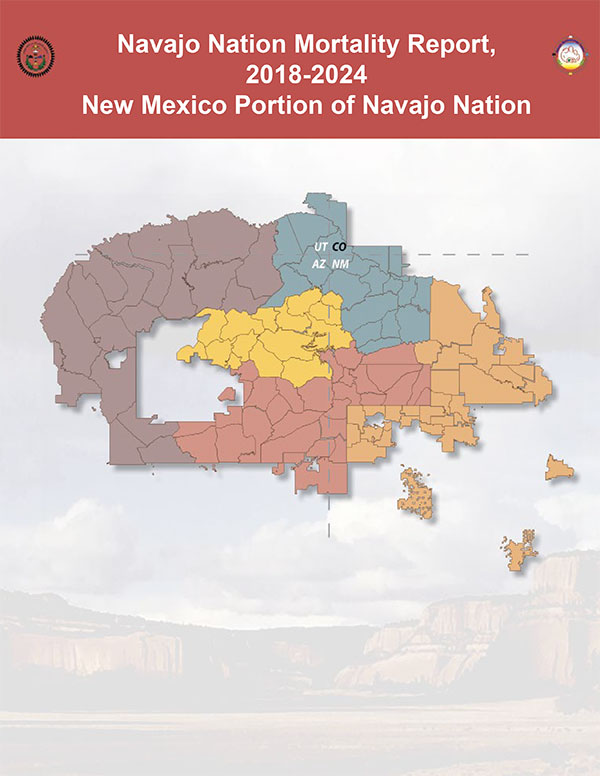
On this podcast, you’ll hear from a variety of employees across each of the TECs, as they share their career journeys and their roles within the organization, as well as the programs that are offered through their specific TEC. They also share about the tribal communities that are supported by their TEC as well.
The content they share provides timeless value and insight into each of the organizations, their missions, and the great positive impact they are having in the tribal communities they serve.
In this episode, we’ll explore the interconnectedness of traditional cultural roots, innovation, and modern solutions. You’ll hear how rest, resilience, and unity are the real medicines for tribal communities.
We’re diving into the power of culturally adapted health tools and real-time dashboards improving lives in Indigenous communities. You’ll hear how tribal communities are leading their own health solutions with data, compassion, and resilience.
Discover how data and technology are transforming public health in tribes across the Great Plains. Our guest shares how secure, user-friendly dashboards empower tribal leaders to fight outbreaks like measles and syphilis. He also shares how collaboration and community-driven data are making a real difference in Indigenous health outcomes.
The USET Office of Tribal Public Health has developed a new ODMAP Toolkit, a resource designed to help Tribal Nations leverage real-time overdose surveillance to strengthen public health and safety across Indian Country.
ODMAP (Overdose Detection Mapping Application Program) is a free, web-based platform that enables first responders, public health agencies, and Tribal Nations to log suspected fatal and non-fatal overdose events in near real time.
It includes features such as “spike alerts”, which notify users when a designated area experiences a sudden surge in overdoses, as well as tools for filtering, charting, and layering additional data like Naloxone dispensing and Tribal boundaries to support rapid response and long-term public health planning.
The new ODMAP Toolkit provides a tailored, Indigenous-centered guide to implementing ODMAP across Tribal Nations. Scheduled to roll out this month, the toolkit includes guidance on:
How to get started with ODMAP
Using ODMAP data to inform public health strategies
Preserving Tribal data sovereignty
The USET Office of Tribal Public Health is offering technical assistance and guidance to any Nashville Area Indian Health Service Tribal Nation or Urban Indian Health Organization interested in ODMAP, including support with enrollment, training, and using ODMAP data to strengthen overdose response efforts.
Guided by data from technical assistance requests, the Oklahoma Tribal Epidemiology Center (OKTEC) took meaningful steps to strengthen public health infrastructure across the region.
Tribal Nations voiced a clear need for deeper skills, greater resources, and sustainable systems and OKTEC responded by bringing together more than 100 Tribal leaders and TEC staff for two powerful convenings.
These gatherings created space for connection, learning, and shared problem-solving, helping shape a stronger and more resilient future for Tribal public health.
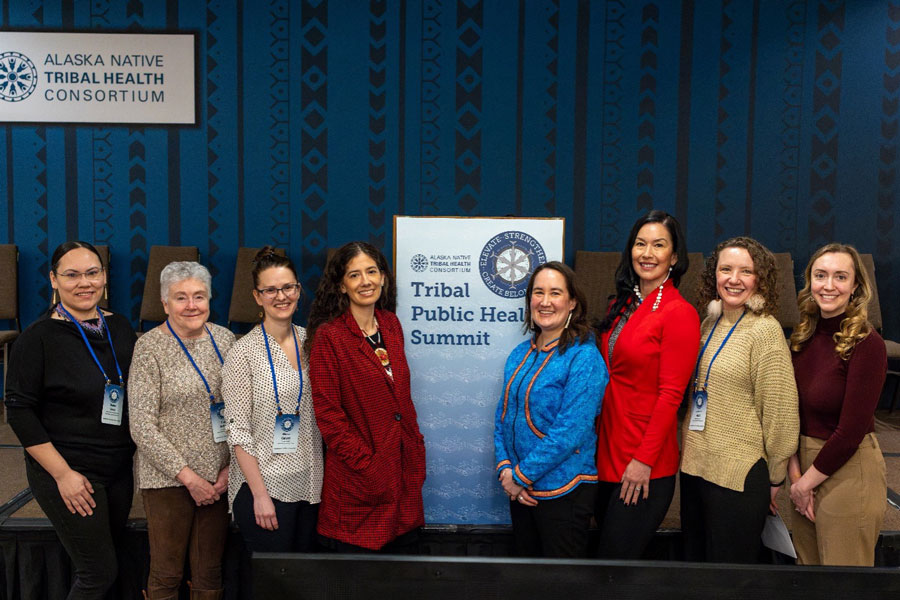
In September, the Alaska Native Tribal Health Consortium’s (ANTHC) Alaska Native Epidemiology Center hosted a Basic Applied Epidemiology for Public Health Workers training to strengthen public health capacity and infrastructure. The goal of this training was to provide a practical, engaging, and applicable course focused for public health workers on key public health analysis and investigation methods, including but not limited to descriptive epidemiology, outbreak investigations, and quantitative methods.
The training brought together participants from ANTHC, Alaska Tribal Health Organizations, the State of Alaska Department of Public Health, and Anchorage Health Department to spend three days in person learning about applied epidemiological methods through a mix of lectures, group discussions, exercises, and case studies.
The agenda included a diverse array of topics, including sessions on:
Rates, ratios, and proportions,
Descriptive epidemiology,
Analytic study design,
Outbreak investigations,
Questionnaire design,
Sampling,
Measures of association,
Developing an analysis plan,
Adverse childhood experiences, and
Regression & modelling
Following the event, participants provided feedback about the value this training provided to them, including many positive reviews of the content. Participants shared that this was an “excellent training”, in particular the most useful parts being:
“Real world examples tied into Alaska relevant scenarios;”
“Getting practical experience with examples and guided exercises;”
“Engagement and Alaska Native case studies;”
“Case studies;” and
“Networking with other people, learning more about ANTHC Epi, going through some exercises on outbreak investigation and study design;” among more.
The final event evaluation demonstrated that 100% of respondents found this training to be “good” or “excellent”, and many participants shared their gratitude for the time to connect with other public health workers.
When the nonprofit Data for Indigenous Justice filed public records requests with the Alaska Department of Public Safety concerning cases it had investigated, the state rejected them.
By Kyle Hopkins, Anchorage Daily News
August 29, 2025