The U.S. Department of Justice (DOJ), Office of Justice Programs (OJP), National Institute of Justice (NIJ) is seeking applications for research and evaluation on violence against women. This program furthers the Department’s mission by sponsoring research to provide objective, independent, evidence-based knowledge and tools to meet the challenges of victims of crime, particularly at the state, local, and tribal levels.

Author TribalEpiCenters
Tribal EpiCenters
02/13/2019
In May 2018, the Albuquerque Area Southwest Tribal Epidemiology Center (AASTEC) launched the Tribal Pregnancy Risk Assessment Monitoring System (PRAMS) – a new tribal public health surveillance system designed to learn more about the experiences, attitudes and behaviors of new American Indian/Alaska Native (AI/AN) mothers before, during, and after their pregnancy. Key topics on the survey include prenatal and preconception care, breastfeeding, substance use, stress and stressors, health insurance coverage, and infant health care and safety.
Tribal PRAMS is a collaboration between AASTEC, the Navajo Tribal Epidemiology Center, and the New Mexico Department of Health.

The survey is complimentary to the existing New Mexico PRAMS, where the majority of new AI/AN mothers not selected for participation in this state-sponsored surveillance system, are invited to participate in Tribal PRAMS. The survey instrument consists of Centers for Disease Control and Prevention PRAMS core survey questions, the NM-state specific PRAMS questions, and a Tribal addendum, which includes questions about breastfeeding, injury prevention, language, and cultural activities. Survey administration is multimodal, where participants can complete the survey by mail, online, or telephone.
The overarching goal of Tribal PRAMS is to strengthen the availability of high quality, AI/AN-specific data that can be used by tribes and tribal health programs to:
- Understand the health status and specific needs of AI/AN mothers and their babies throughout New Mexico
- Monitor trends in the health status of AI/AN perinatal women and their infants over time
- Develop and/or enhance health programs and clinical care for AI/AN perinatal women and their infants
- Inform tribal maternal child health policy development
For more information on Tribal PRAMS, please contact Sheldwin Yazzie shyazzie@aaihb.org or Ayanna Woolfork awoolfork@aaihb.org

Tribal EpiCenters
02/07/2019
The Albuquerque Area Southwest Tribal Epidemiology Center (AASTEC) is excited to announce the creation of the Tribal Injury Prevention Resource Center (TIPRC). This program serves all American Indian/Alaska Native tribal and urban communities across the country.
Its key aims are to provide technical assistance and training to promote the implementation of evidence-based best practices in motor vehicle safety throughout Indian Country with the goal of reducing injuries and fatalities associated with motor vehicle crashes.
Technical support and Program Services
- Understand and implement best practices for tribal motor vehicle injury prevention.
- Develop tribal policies to decrease alcohol-impaired driving and to promote seatbelt and car seat use.
- Evaluate tribal motor vehicle safety projects.
- Develop local surveillance systems to track injuries and deaths caused by motor vehicle crashes.
- Identify data sources to monitor motor vehicle crashes and fatal and non-fatal injuries caused by crashes.
- Collect and manage observational survey data related to seat belt and car seat use, etc.
Injury Prevention Trainings (available upon request)
- Child Passenger Safety (CPS) technician certification and CEU courses
- Safe Native American Passengers (SNAP) training
- IHS Introduction to Injury Prevention (Level 1) training
- IHS Intermediate Injury Prevention (Level 2) training
- Identifying funding opportunities for tribal injury prevention programs
TIPRC Team
Jerrod Moore (jmoore@aaihb.org) TIPRC Program Manager
Carrie Brown, MSML (cbrown@aaihb.org) Tribal Traffic Safety Specialist
Tabatha Harris, MHHSA (tharris@aaihb.org) Tribal Traffic Safety Specialist
Tribal EpiCenters
01/30/2019
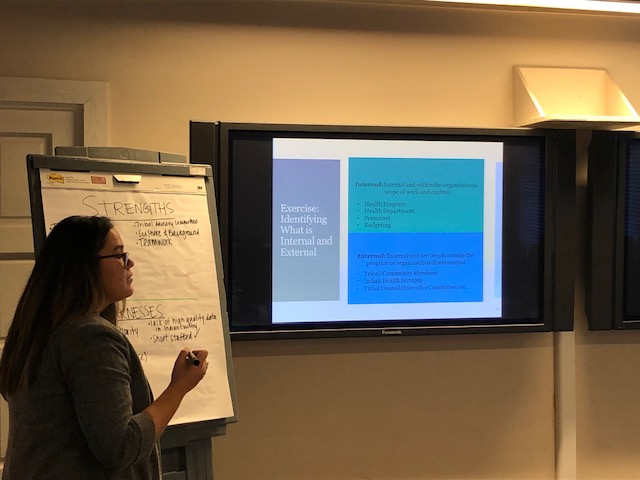
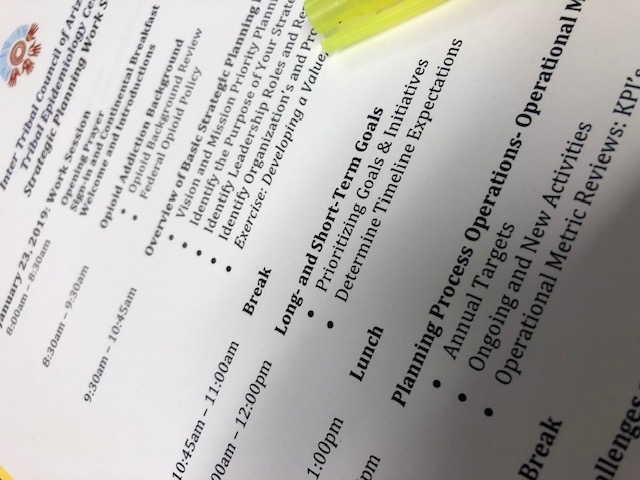
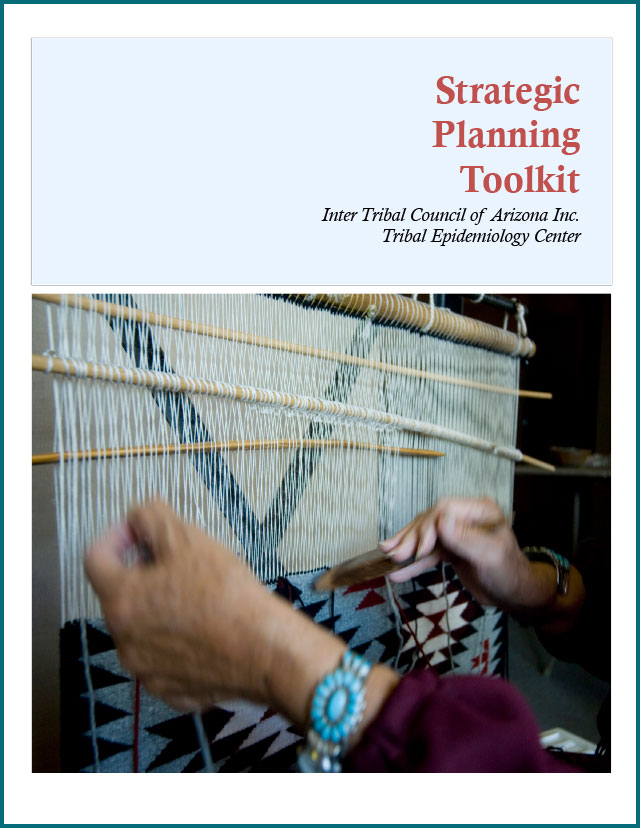
The Inter Tribal Council of Arizona, Inc., Tribal Epidemiology Center (ITCA TEC), in partnership with Blue Stone Strategy Group, LLC, first piloted the Strategic Planning Toolkit with the University of Arizona, Northern Arizona University, and the Partnership for Native American Cancer Prevention, funded in part by the Indian Health Service (IHS) Cooperative Agreement in 2016. This pilot project allowed for the feedback from Tribes and further development of the Toolkit and the hands-on working session. This session resulted in a Tribe receiving additional funding for local cancer programming. A Strategic Planning workshop was available to all Tribes in the IHS Phoenix-Tucson Service Area in 2018 under the IHS Cooperative Agreement as well.
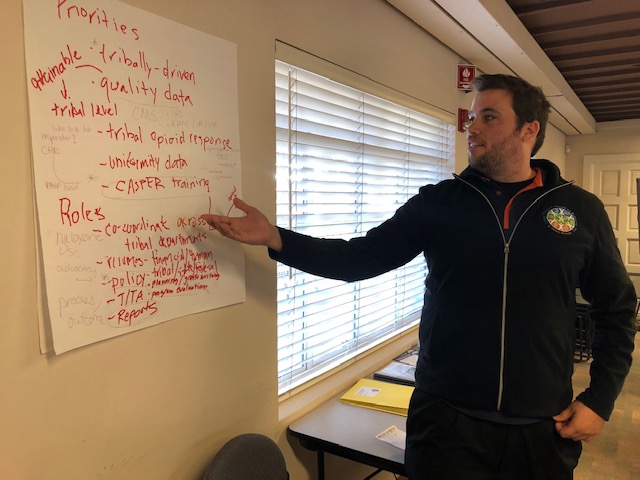
Under the Tribal Epidemiology Centers, Building Tribal Public Health Infrastructure program, ITCA TEC and Blue Stone Strategy Group were able to again assist 8 Tribes with designing program specific Strategic plans and specialized training and technical assistance (T/TA) in 2018.
As part of the Opioid Supplemental funding under TECPHI and the IHS Cooperative Agreement in 2019, most recently the ITCA TEC and Blue Stone were able to partner again with Arizona Department of Health Services, the State of Arizona Department of Emergency and Military Affairs, and four Tribes to assist Tribal programs with the tools to development local program plans to combat the opioid epidemic in their communities. This programming can assist Tribes with the development of program plans to work towards additional funding for enhanced programming, and improve program evaluation tools and measures, which can achieve the goal of strengthening health and wellness of American Indians.
Tribal EpiCenters
01/29/2019
Are you Alaska Native or American Indian and interested in health research? Are you a researcher or public health professional interested in Alaska Native health research? Are you at least 18 years old?
The Alaska Native Tribal Health Consortium (ANTHC) and Alaska Pacific University (APU) invite you to attend up to three weeks of courses held at APU covering:
- Indigenous and Western research methodologies
- Community-based participatory research
- Culturally responsive community engagement and communication
- Health research ethics
- Health research and historical trauma
Choose the week(s) that best fits your needs:
- Week one | May 6-10
Advanced research courses - Week two | May 13-17
Intermediate research ethics courses - Week three | May 20-24
Introductory research courses
In addition to the three weeks of courses, five-week internships are being offered!
Cost:
- There is no cost for the three weeks of courses
- Limited scholarships for travel (including airfare, room and board) are offered
- Academic credit available and professional development
Registration opens in February!
More Information:
Contact Lauren Smayda at lcsmayda@anthc.org or (907) 729-4551.
This program is supported by the National Institute Of General Medical Sciences of the National Institutes of Health under Award Number S06GM127911. The content is solely the responsibility of the authors and does not necessarily represent the official views of the National Institutes of Health.