Success Stories

Success Stories

TEC Success Story: Public Health Authority 101

Success Stories, TEC News
featured image

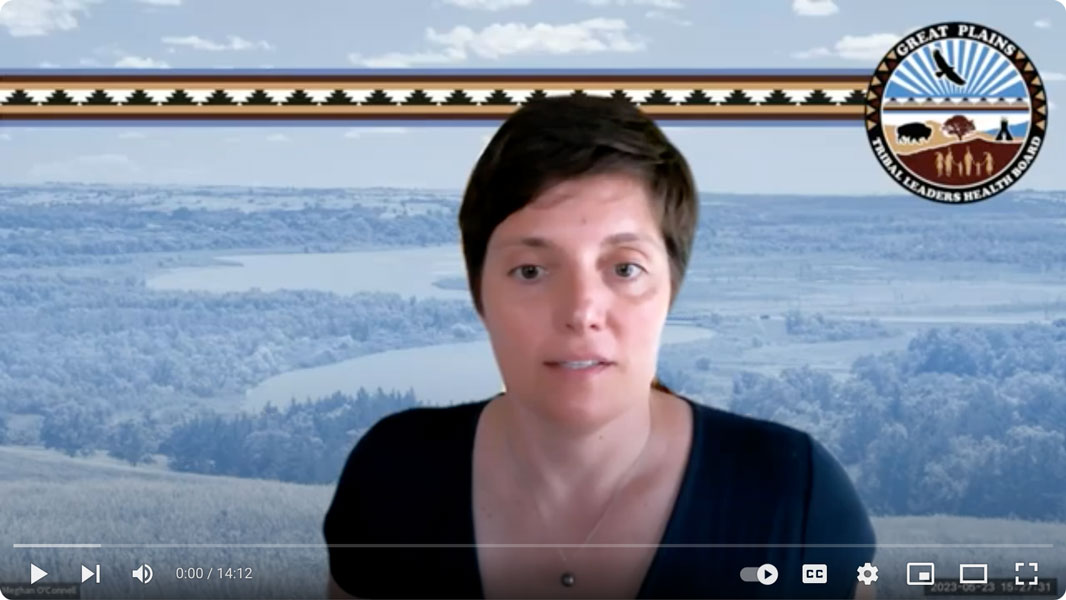
In this video presentation to the Centers for Medicare & Medicaid Service (CMS) Tribal Technical Advisory Group (TTAG) Data Subcommittee on May 23, 2023, Meghan O’Connell, MD, MPH (Chief Public Health Officer of the Great Plains Tribal Leaders’ Health Board) and Chris Alibrandi O’Connor, JD (Deputy Director, Mid-States Region Office for The Network for Public Health Law) share the legal basis for Tribal Epidemiology Center’s (TEC) access to protected health information for public health purposes.

With the reauthorization of the Indian Healthcare Improvement Act in 2010, TECs were designated as “public health authorities” which allows TECs the same access to protected health information/data for public health purposes as other public health authorities, like state health departments.

These activities were supported through a variety of funding opportunities including the coordination and collaboration activities made possible by the Indian Health Service and the CDC’s Tribal Epidemiology Centers Public Health Infrastructure program, National Center for Chronic Disease and Prevention and Health Promotion, Healthy Tribes Program.


TEC Public Health Authority 101


TEC logo
For more information about each of the 12 TECs, visit https://tribalepicenters.org/12-tecs/.


tec-success-stories-header

OKTEC Success Story: Tribal Health Experiential Student Internship Seminar (THESIS)

Success Stories, TEC News
featured image
The Southern Plains Tribal Health Board recently concluded its very first virtual internship cohort with 46 students who completed the virtual 8-week experience. The Tribal Health Experiential Student Internship Seminar (THESIS) program was one of seven organizations awarded, and the only program to focus solely on Tribal public health and Native American health.


The program gave undergraduate students nationwide a glimpse of working in Indian Country with first-hand accounts of staff actively employed in positions within Tribal nations, universities, TECs, health departments, and federal and other partnering Tribal organizations.


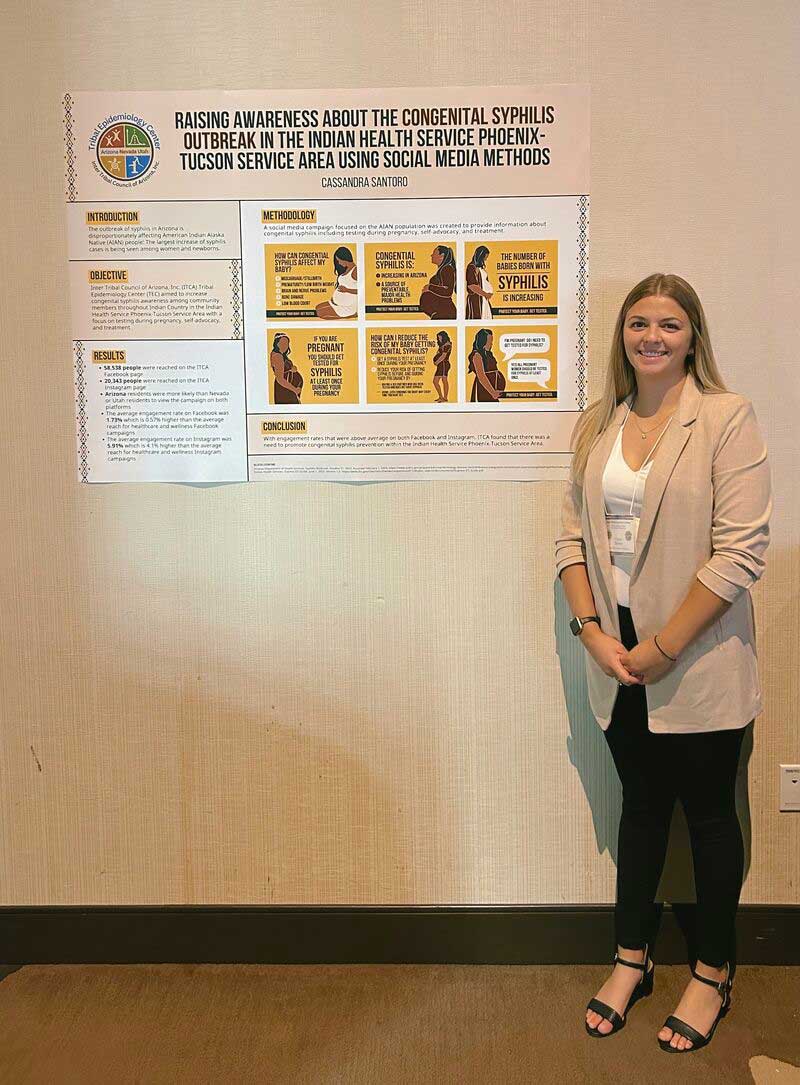
Funded by the CDC’s Office of Health Equity (OHE), students were led through a wide range of courses focusing on Tribal public health with a curriculum around evaluation, cultural competency, racial misclassification, data collection, epidemiology, and professional skills. Students also experienced being paired with a mentor, who guided them throughout the 8-weeks on a research poster project that would be presented at the CDC Lewis Ferguson Showcase in Atlanta, Georgia. Examples of research posters included topics over food deserts, culturally relevant Native youth curriculum, Native American oral health, mental health, and health disparities among Native American communities.

Through THESIS, students were not only exposed to tribal public health as a career but also to the diverse landscape that is public health. “We want students to be exposed to aspects of Native public health to gain different perspectives when choosing their profession. We often hear, ‘I wish I would have been taught that’ from working public health employees,” Gary Piercey, Program Coordinator, said. “This gives students a chance to really investigate some of the topics that are meaningful to them.”

Abby Mayes, a member of the Cherokee Nation stated, “I enjoyed the THESIS program greatly. I enjoyed the topics that were presented and was able to research how the COVID-19 pandemic directly impacted the Native American population within the state of Oklahoma in 2021. This internship gave me the opportunity to learn about Tribal Health, which I had yet to learn about from my previous public health courses in college.”

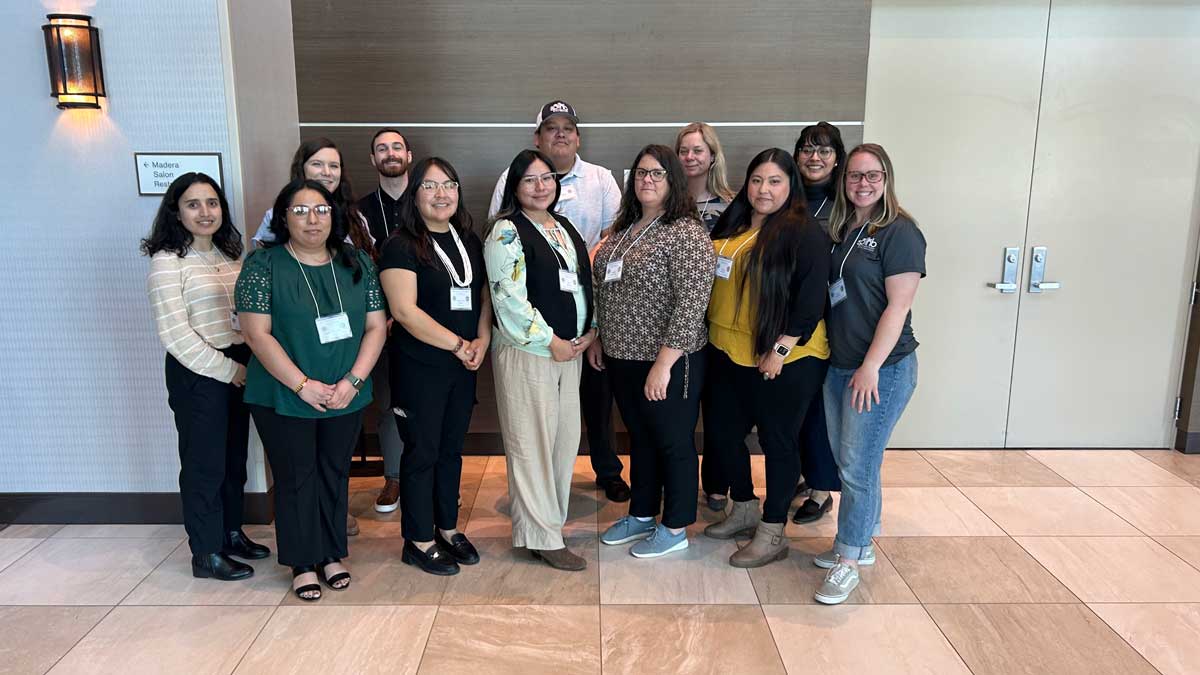
THESIS intern students at the CDC Showcase in Atlanta, GeorgiaTHESIS intern students at the CDC Showcase in Atlanta, Georgia.

Jordan Craig, a member of the Cherokee Nation, answers questions over her poster presentation, “Addressing Gaps in Prenatal Care for American Indian and Alaska Native People with Opioid Use Disorder.”Jordan Craig, a member of the Cherokee Nation, answers questions over her poster presentation, “Addressing Gaps in Prenatal Care for American Indian and Alaska Native People with Opioid Use Disorder.”


OKTEC-logo

If you know of an undergraduate student interested in Tribal public health, applications for the 2024 year will be available on October 1, 2023, at the website https://thesis.spthb.org/.


tec-success-stories-header

ITCA-TEC Success Story: Regional Community Health Profile

Success Stories, TEC News
featured image
One major project the ITCA TEC was able to complete was the Regional Community Health Profile (CHP). Additionally, increased training in statistical analysis along with enhanced coding software has allowed the TECPHI team an avenue to improve systems and efficiency in developing reports resulting in 43 Tribal-specific CHPS.

Using SAS software, the Tribal reports were all automated. While there is work to be done in terms of customization for each Tribe, formatting, and additional statistical analysis along with current counts, the TEC has made strides in being able to provide better information to those we serve. This is also impacted by the partnerships the TEC has been able to build and maintain and strong relationships with the Arizona, Nevada, and Utah health departments have allowed us to access updated data each year.

Over the last year the TEC has been able to update overall IHS data and get updated COVID information to be used in the future. In general, access to data has been greatly improved and will allow ITCA to provide more timely and relevant information to those in our service area.


tec-success-stories-header

CTEC Success Story: Investing in the future of public health

Success Stories, TEC News
featured image
Each summer California Tribal Epidemiology Center (CTEC) invites college students and recent graduates to participate in the Summer Research Assistant Program (SRAP). Tribal and Urban Indian Health Programs can participate as host sites for Summer Research Assistants (SRA). The CTEC team serves as mentors for each SRA. This summer’s 2022 SRAP, seven SRAs are working on projects ranging from diabetes prevention, data collection, COVID-19 case data analysis, public health advisory, and accreditation processes.

We met with Chiagoziem Okonkwo, an SRA from the summer of 2021. Chiagoziem worked with the Indian Health Council (IHC) to create a multilevel prevention project to address commercial tobacco-related harms.


“I grew up in Nigeria. We are not taught anything at all about the Native American community or culture. It was so interesting to learn about research and the Native community as a whole. I felt like I was a big part of the IHC and what we were doing.”
 
– Chiagoziem Okonkwo


Builds Essential Skills

Chiagoziem reflected on the skills she gained during the SRAP. “I would say that the two big takeaways were how to conduct key informant interviews (KIIs) and the concept of community–based participatory research. I realized I would like to start an organization like CTEC in Nigeria. When it comes to communities that have been historically misrepresented in research, the Nigerian community definitely represents that. KIIs were interesting, learning how to conduct them and learning that I like to talk a lot.”

Guides Education and Career Choices

For Chiagoziem, the SRAP introduced the concept of presenting research in film formats. She recalls, “That was the first time I saw something like that, and it made me really interested in film, editing, and cinematography…CTEC played a role. I will
be graduating in June 2024 from UCLA with a Psychology Major with a minor in film.”

Makes a Difference

CTEC supported 22 SRAs from 2017 to 2022. Every SRA has a story about their experience and the difference that the SRAP made. For Chiagoziem, the difference was everything. “It did not happen on purpose, but I think back to the application process… it was the summer of my first year of my undergraduate. I felt unqualified. But being able to work toward it and actually get the SRA encouraged me that I could go after everything that I want. I would never know what the outcome would be… I should always try. That is one skill that I learned from my experience. Keep trying.”


Chiagoziem Okonkwo
Chiagoziem Okonkwo
 
Investing in the future of public health
 
Investing in the future of public health

#keeptrying
#buildingcapacity
#internshipsmatter
#goafterwhatyouwant
#publichealthworkforce


CTEC-logo

tec-success-stories-header

RMTEC Success Story: The School Food Institute

Success Stories, TEC News
featured image
In 2022, the Rocky Mountain Tribal Epidemiology Center (RMTEC) formalized a collaborative partnership with the Chef Ann Foundation, No Kid Hungry, and the Coalition to End Childhood Hunger to bring a comprehensive diabetes prevention approach to the Tribal schools in the RMTEC region. With the help and expertise of these partners, RMTEC aims to transform Tribal school food programs at the local level through diabetes education and training of school food service workers.

The RMTEC School Food Institute sponsors a set of online courses offered by the Chef Ann Foundation that provide professional development and training on successful “scratch-cook” operations in schools, giving school food service professionals the tools and knowledge to make fresh, healthy school meals for its students and staff.

In April 2022, RMTEC staff, along with staff from the Chef Ann Foundation, visited the Blackfeet and Flathead Tribal sites to provide onsite scratch-cook training. The chefs trained school food service staff on making simple, healthy meals with fresh ingredients and served the meals in the schools. Staff also received education and training on using locally available ingredients. It is RMTEC’s hope to expand these partnerships to include all Tribal sites in the Rocky Mountain region over the next few years.

The School Food InstituteThe School Food Institute


RMTEC-logo-1000


tec-success-stories-header