The program gave undergraduate students nationwide a glimpse of working in Indian Country with first-hand accounts of staff actively employed in positions within Tribal nations, universities, TECs, health departments, and federal and other partnering Tribal organizations.
Funded by the CDC’s Office of Health Equity (OHE), students were led through a wide range of courses focusing on Tribal public health with a curriculum around evaluation, cultural competency, racial misclassification, data collection, epidemiology, and professional skills. Students also experienced being paired with a mentor, who guided them throughout the 8-weeks on a research poster project that would be presented at the CDC Lewis Ferguson Showcase in Atlanta, Georgia. Examples of research posters included topics over food deserts, culturally relevant Native youth curriculum, Native American oral health, mental health, and health disparities among Native American communities.
Through THESIS, students were not only exposed to tribal public health as a career but also to the diverse landscape that is public health. “We want students to be exposed to aspects of Native public health to gain different perspectives when choosing their profession. We often hear, ‘I wish I would have been taught that’ from working public health employees,” Gary Piercey, Program Coordinator, said. “This gives students a chance to really investigate some of the topics that are meaningful to them.”
Abby Mayes, a member of the Cherokee Nation stated, “I enjoyed the THESIS program greatly. I enjoyed the topics that were presented and was able to research how the COVID-19 pandemic directly impacted the Native American population within the state of Oklahoma in 2021. This internship gave me the opportunity to learn about Tribal Health, which I had yet to learn about from my previous public health courses in college.”
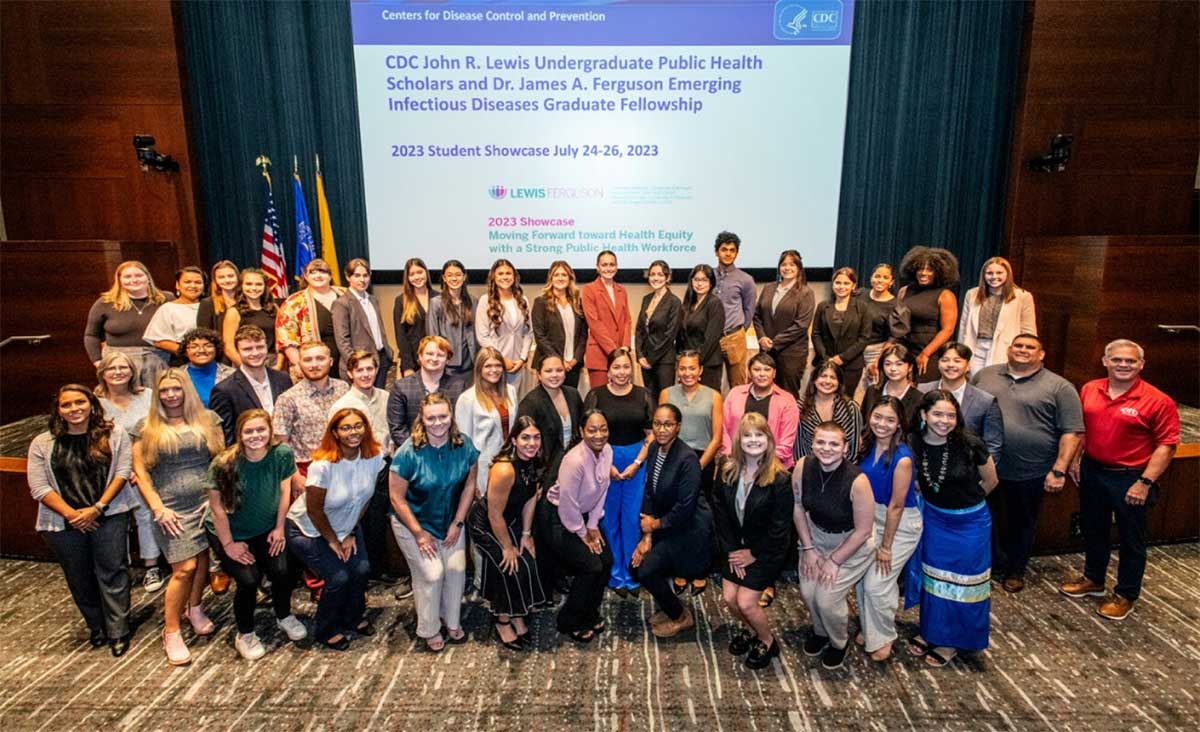 THESIS intern students at the CDC Showcase in Atlanta, Georgia.
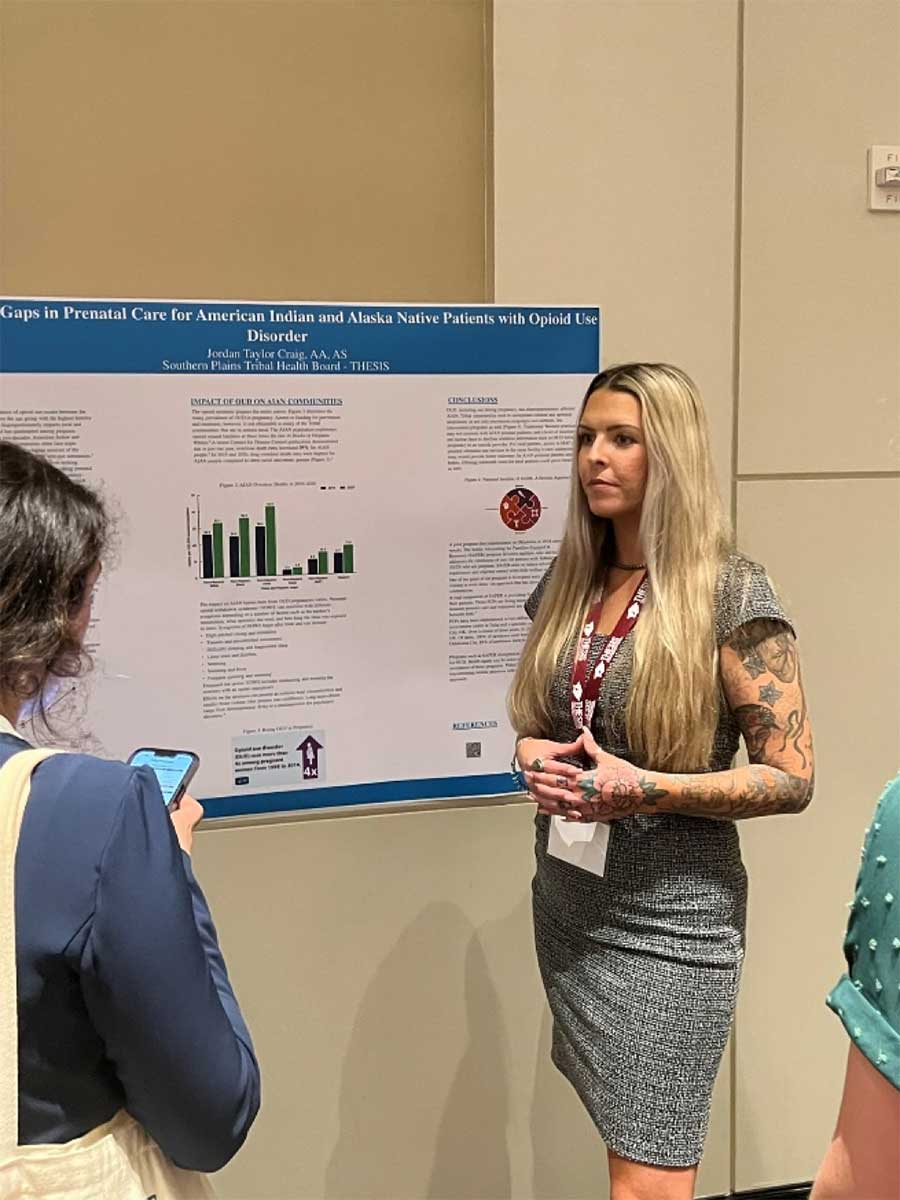
Jordan Craig, a member of the Cherokee Nation, answers questions over her poster presentation, “Addressing Gaps in Prenatal Care for American Indian and Alaska Native People with Opioid Use Disorder.”
If you know of an undergraduate student interested in Tribal public health, applications for the 2024 year will be available on October 1, 2023, at the website https://thesis.spthb.org/.